
Forget About Literature
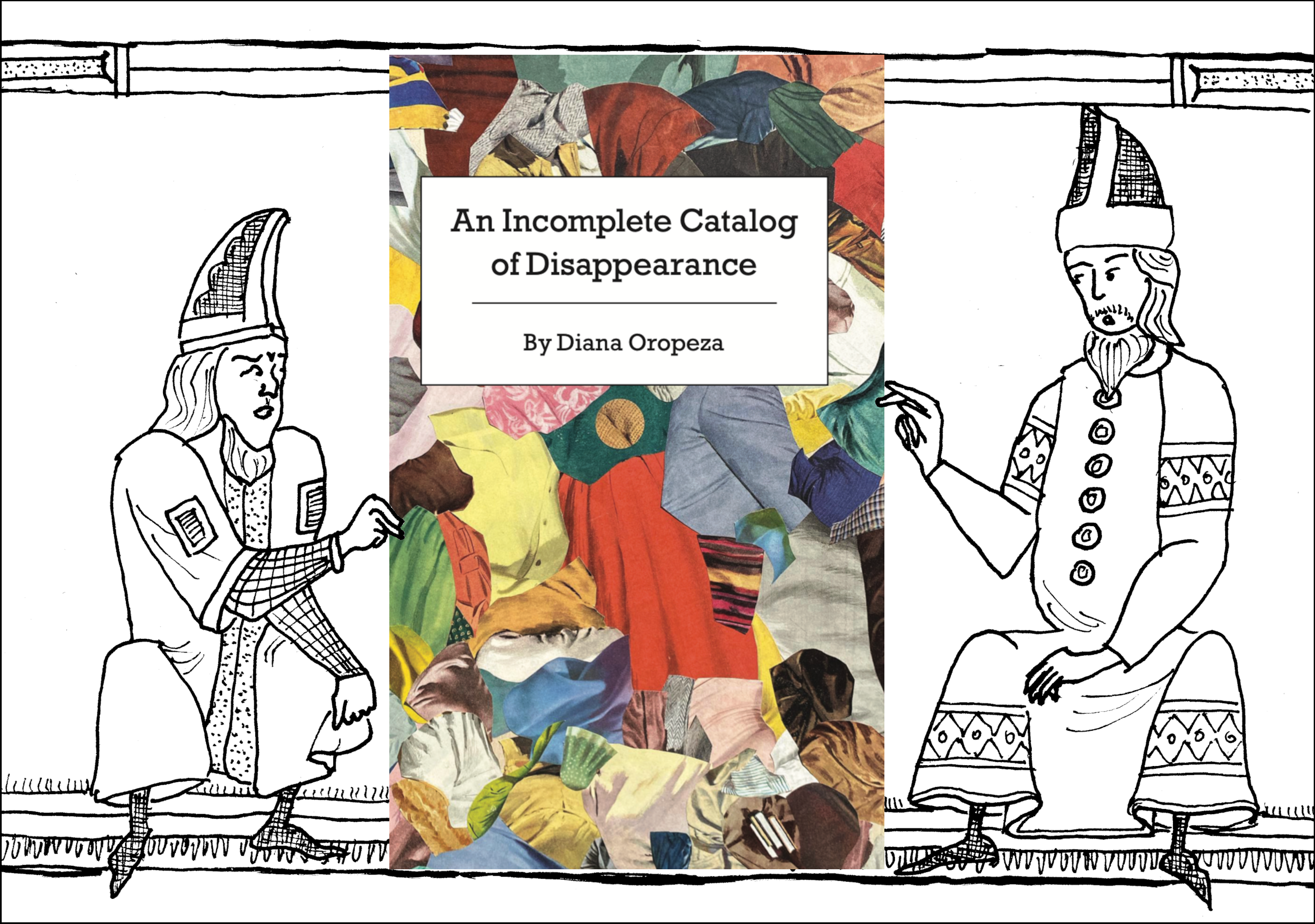
An Incomplete Catalog of Disappearance – Diana Oropeza; Future Tense Books; 84pp; 2024

This week’s post, our thirteenth following our review of Michael Bible’s Little Lazarus, features Diana Oropeza’s An Incomplete Catalog of Disappearance, published in 2024 by Future Tense Books. Based out of Portland since 1992, Future Tense has grown from a DIY xerox operation to a publisher of beautifully designed paperbacks.
In her recent critique of a minor-but-growing “flash fiction” industry, Alanna Schubach asks whether the genre really needs to exist. Why would we want to separate very short stories from the long, venerable history of the short story?
The answer, Schubach suggests, is a general crisis of attention. Flash fiction is quick to produce and quick to consume, which is convenient in a world where writers have little time for writing and readers have little patience for reading. Individual works of flash fiction can of course be perfectly apropos, masterfully pruning words to create an otherwise unattainable sense of immediacy or sublimity. But if style and craft were all that mattered, we would just call these texts short stories. The reason we increasingly find them cordoned under the label “flash fiction” is because they cater so willingly to conditions of distraction, dilettantism, and hurriedness.
This isn’t just a moral claim about how we’re becoming lazy or stupid. It’s a formal claim about the gradual disappearance of literature as we once knew it. Flash fiction is what happens when we treat literature as a problem to be managed through downsizing. The publishing industry is shrinking, the percentage of Americans who read novels is shrinking, and, now, literature itself is shrinking. We can imagine literary texts continuing to shrivel into ever smaller chunks until one day they vanish altogether.
This was the grim prospect I had in mind while reading Diana Oropeza’s flash fiction collection, An Incomplete Catalog of Disappearance. Across sixty works of prose, almost all of them shorter than one page, Oropeza explores her titular theme through various scenarios in which presence yields to absence: letters arrive for someone who no longer resides at the address; a boy suddenly gains and then just as suddenly loses the ability to play piano like a virtuoso; a retired dairy factory worker reminisces about the missing children printed onto milk cartons.
Given the book’s vanishing form and content, I couldn’t help but read each piece as a commentary on literature’s uncertain future. In a half-page titled “Bryan,” for instance, the narrator struggles with verb tenses while discussing a missing person:
When C disappeared, everyone said (would say?) the present tense is more optimistic, so I tried to keep it positive: she is missing, she is lost in the woods, we think, she isn’t the type to just disappear.
The narrator does sometimes employ the past tense, but not without reservations:
And when she was found, she was (...is?) dead. She was (...and/or is?) gone.
It’s like a micro-lesson in deconstruction. Language permits us to speak of people even when they’re not around. It makes them present, literally, re-presents them. But what happens when we speak of this absence itself, when we use language to make absence present? We see the whole paradigm collapse, until the narrator cannot proceed without relentless waffling and self-doubt.
Isn’t this also what flash fiction does? Represents something that isn’t there? Like a present tense statement about a friend lost in the woods, flash fiction carries literature forward after it is (...was?) already gone.
An Incomplete Catalog of Disappearance is full of clever pieces like this—though if I’m being honest, I’ve already forgotten most of them. This is another problem with flash fiction: the stories are so brief and require so little attention that they’re easy to forget.
But then, I could say the same about everything I read. Each year I dedicate hundreds of hours of intense focus to books I end up barely remembering. Novels I finished only a few months ago—novels I enjoyed, which I would list among my favorites of all time—I now recall as little more than a vague collection of moods and situations. The more books I read the more disturbing this becomes. Art, in Viktor Shklovsky’s influential estimation, is what awakens us to our own existence. Most of our lives are spent performing routines more or less unconsciously, which is to say, most of our lives never exist at all; literature ruptures these habitual modes of experience, reattuning us to the sensation of things and reinvigorating our consciousness of a life that can, at last, be fully lived. Yet when I try to picture the hours I spent last year reading Berlin Alexanderplatz or Lolly Willowes or The Catacombs, it’s like staring into a window clouded with steam. Does this mean all those hours didn’t really exist? When I sit down to read a novel, am I literally throwing my life away?
Yes. Or at least, “yes” felt like the correct answer while I was reading An Incomplete Catalog of Disappearance. Yes, things disappear. Yes, literature is transient, memory is provisional, we mortals are subject to loss and decay.
Some people try to resist. A quick search on Substack returns multiple widely shared how-to articles promising to help us “remember everything you read.” Related search results include even more widely shared how-to’s about “the secret to” reading more, reading faster, reading deeper, and reading better. It would appear many of us share an urgent desire to redeem our finite lives through culture, not “culture” in the historical sense of the self-development of humanity, but rather in the technocratic sense of a system of self-optimizing hacks: follow these simple steps and you too can read everything, understand all of it, and remember it forever.
Oropeza asks us instead to grow comfortable with letting go. She invites us to sit with disappearance for a while, to observe it from sixty different angles. Each story leads us one step further from a definitive statement on the matter, widening the penumbra around some dark core that would blind us if we stared at it for too long. An incomplete catalog of disappearance: that’s just what literature is. That’s what life is.
All this reminded me of something from Michel Houellebecq’s novel, Platform, which I read in a college course many years ago. I couldn’t recall the exact words, so I found an old copy and looked up the passage:
We remember our lives, Schopenhauer wrote somewhere, a little better than a novel we once read. That’s about right: a little, no more.
This disappointed me. In my memory the line had been much more profound. I decided to press further, to see where Schopenhauer’s thoughts were headed, so I searched Google for the original quotation. I couldn’t find it.
Not sure if this gets you where you want to go:
Here is the commonly accepted English translation of the quote:
"Every man takes the limits of his own field of vision for the limits of the world. A man's life, as viewed by himself, is a succession of accidents; but seen from the outside, or in retrospect, it has the character of a work of art."
A slightly fuller version (from Parerga and Paralipomena, Vol. I) appears in many translations as:
"In our own life we see only the successive present moments; but when we look back on it, it appears like a completed work of art. What seemed at the time accidental and disconnected reveals itself as necessity and coherence."
We might forget but that doesn‘t mean that there is no small part in us that changed (influenced?)