
White Noble Savages
Molly – Kevin Honold; Autumn House Press; 184pp; 2022

This week’s post, our eighth following last week’s review of Sonya Walger’s Lion, features Kevin Honold’s Molly, published in 2022 by Autumn House Press. Founded in 1998 in Pittsburgh, PA, Autumn House Press has published over 150 works of poetry, fiction, and nonfiction, including the debut collection of Ada Limón, the 24th Poet Laureate of the United States.
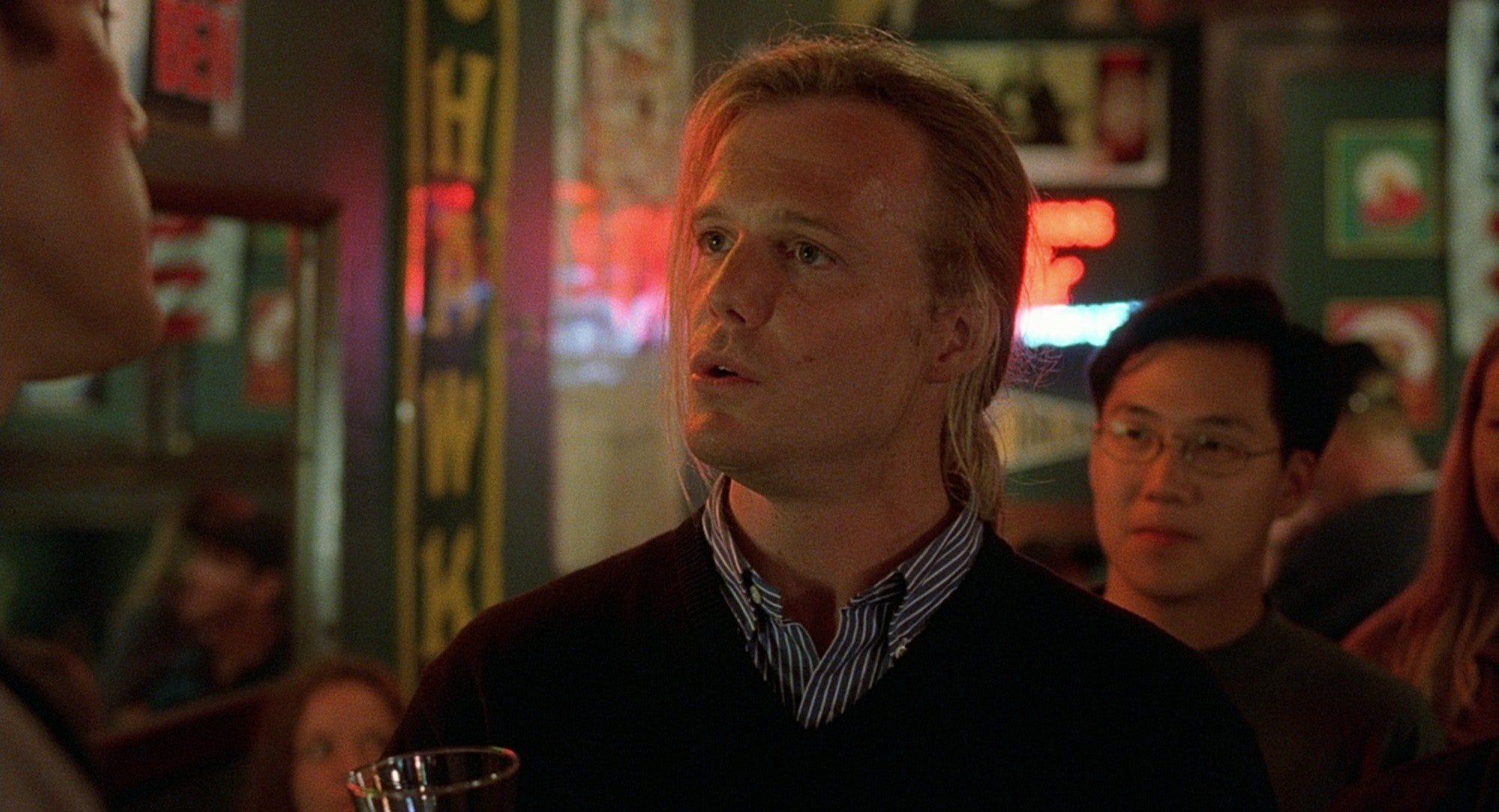
A few pages into Kevin Honold’s debut novel, Molly, I realized something unfortunate about myself. I realized that if I’m reading an author I know nothing about, and if that author crafts thoughtful prose, then I basically assume the book was written by this guy:1
Molly is a story-driven work, yet Honold meanders through the first seven full pages with contextless observations about a deserted New Mexico town. Such as:
The commonest trace of departed people, it seems, is their trash, and so it is in this place. Look into any empty building, see the floor covered with dismembered chairs, a cast-iron sink, busted concrete.
A blanket, a rusted bedspring, a red plastic bucket with a caved bottom.
Broken ceramic cups the color of old teeth.
In a 170-page book, seven pages of this feels like a lot. I found myself skimming, pausing to check my phone, silently asking Honold to quit jerking yourself off and get on with it already.
And then it struck me. I have long been vaguely aware of my skepticism toward unfamiliar writers, but now I grasped with awful clarity: I’m a cynic. I’m an insufferable crank. When I encounter flowing imagery or bold formal innovations I immediately surmise the author is a vapid, pretentious, bloviating charlatan, and then I wait to be proven wrong. Why did I care if Honold took his time stirring up lore about the fictional ghost town of Santa Juana de Arcado? Because I have been conditioned by decades of social media consumption and advanced humanities education to believe that if I’m not being critical, then I’m being stupid; that every new author I read is out to steal my attention, to build their brand™, to degrade whatever semblance of literary culture still clings to life in this country—until they convince me otherwise.
This doesn’t make me feel interesting or cool. It mostly makes me feel depressed. I’m disclosing this ugly quirk because I suspect I’m not alone. I imagine that under our increasingly alienated conditions of cultural production other readers feel they, too, must choose between austerity and vulgarity, between stoically mistrusting all life’s cultural pleasures and blissfully gulping down slop like a 12-year-old at Golden Corral.
It is this dichotomy that Molly crystallized so painfully for me, at first because I found the prose indulgent and cloying, and then later, to my surprise, because Molly seemed to wish to transcend this dichotomy altogether.
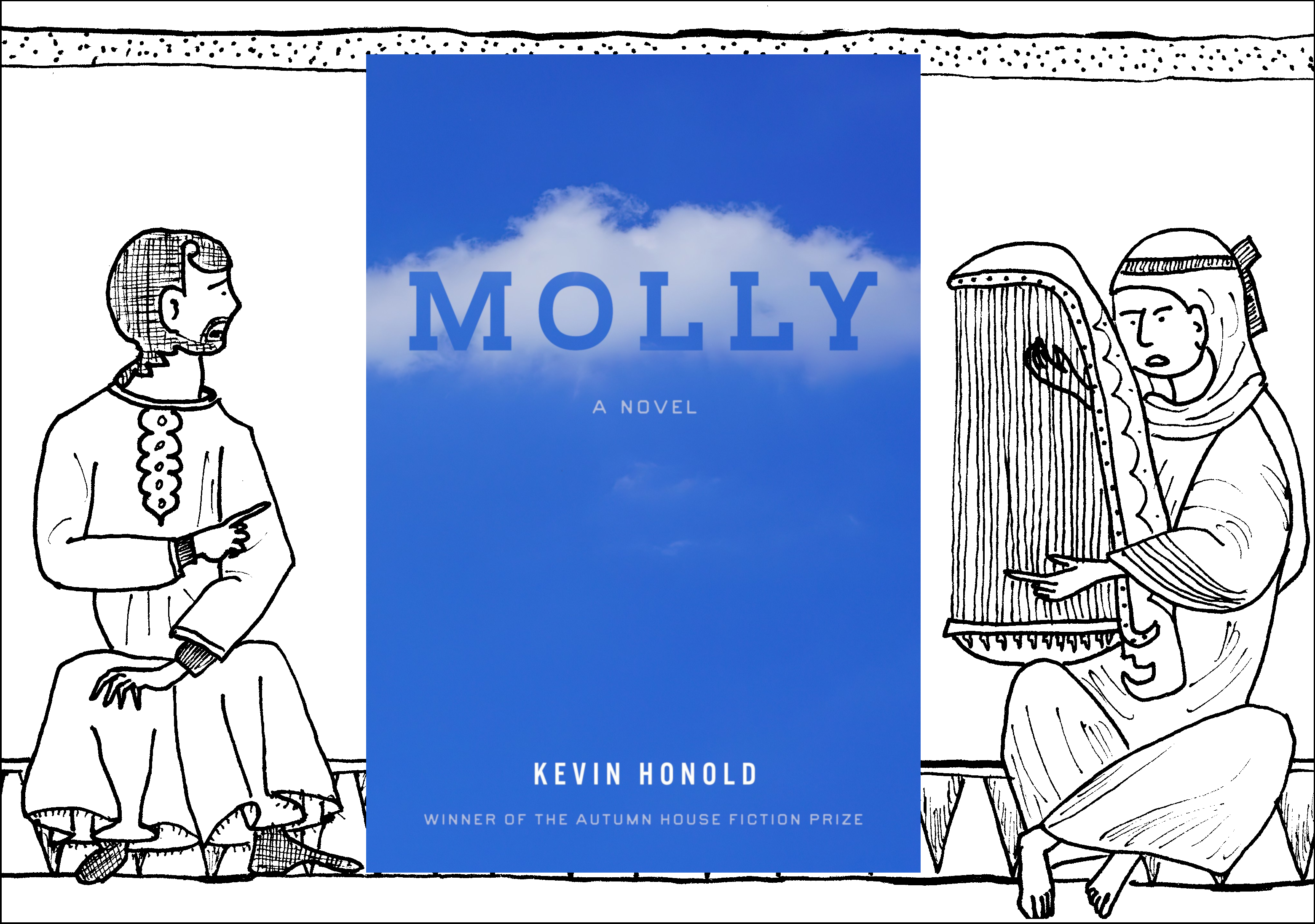
Molly is about a nine-year-old boy named Raymond who lives in a trailer out on the mesa with his new and newly-widowed aunt, the titular Molly. There’s no school on the mesa, so Molly resolves to “do school” with Raymond herself. It doesn’t matter that Molly is barely literate, in fact her ignorance is her strength. Together the uneducated duo wanders Navajoland collecting rocks and scrounging up discarded library books, unburdened by the specialized knowledge and abstract concepts that numb us to the vital spirit of things. If they encounter a bird, for instance, they re-christen the species accordingly. The Cassin’s Finch, named after the 19th-century ornithologist John Cassin, becomes the Devil’s Nightcap because of its red crown. A bird that steals a piece of ribbon becomes Ribbon-Thief. They carry around a recycled copy of Biotic Survey of the Great Basin, jotting all these private taxonomies into the margins: Charity Bird, Blue Rumor-bird, Twig-Chatty, Queeny, Lonely Bird.
Making up new names for bird species is a stupid way to spend your time. But Molly and Raymond aren’t stupid. Their naïveté fuses with their curiosity, imagination, and empathy to forge a sharp critical instinct. From an old history textbook they learn about the Comanche leader Tavibo Naritgant, dubbed “Green Horn” due to the green-colored horn he wore into battle. When Naritgant died his horn passed from the Viceroy of New Mexico to the King of Spain to, finally, the Pope—but the textbook doesn’t mention why. Raymond recalls that “the omission didn’t bother me much and I was prepared to turn the page. But Molly was not satisfied”:
I heard the pope’s palace is plated in gold, she said. So what’s he need this horn for? I bet he sneaks down in his pointy slippers at night and puts that horn on. Can you see him, Ray Moon? Wearing pajamas and prancing about in that green horn, like some big kid in the dark…If you ask me, she said, the pope oughtta give that green horn back. She turned the page.
Molly doesn’t need a PhD in postcolonial theory to read beyond the text. She just needs to imagine the Pope in his pajamas and she can intuit the entire indigenous artifact repatriation movement from scratch. She is so moved by her insights that she orders Raymond to bury the textbook in the dirt.
Molly and Raymond are neither joyless critics nor joyful philistines. They’re something else, something innocent yet serious we can find among the Jim Burdens and Scout Finches of the literary canon. It’s something highly seductive to me personally. How astute of a reader could I become if I had not been anesthetized by critical theory, postmodernism, an eight hour workday, social media addiction, AI slop, and the reckless proliferation of unvetted literary culture via self-publishing platforms like Substack? What if I didn’t have to choose between becoming Theodor Adorno and becoming a Disney Adult? Honold’s contention is that there is a third way, an uncharted trailer park pensée sauvage.
And yet I can’t help thinking: of course that’s Honold’s contention, he’s a debut novelist. He just got finished reading some Marxian historian, Pete Garrison probably. He’s gonna be convinced of that until next month when he gets to James Lemon, and then he’s gonna be talking about how the economies of Virginia and Pennsylvania were entrepreneurial and capitalist way back in 1740. That’s gonna last until next year, when he’s gonna be out here regurgitating Gordon Wood, talking about the pre-revolutionary utopia and the capitalizing effects of military mobilization. And maybe someday decades from now Honold will pull a copy of Molly from his bookshelf, he’ll blow the dust from the cover and then stand there beside the window, and as his eyes squint into the fading daylight he’ll find himself unable to recall anything about the novel he once labored so mightily to write, except this: the commonest trace of departed peoples is their trash.
I think this applies regardless of race or gender, though it certainly helps if the author has a mayonnaise name like “Kevin Honold.”
incredible how much mileage you’ve gotten out of the four movies you’ve seen
and good Will Hunting himself is the unlikely embodiment of both the refined genius and hedonist brute